TCP/IP Protocol Suite for Network Communication (2026)

Introduction to TCP/IP Protocol Suite
The TCP/IP Protocol Suite is a set of communication protocols used to interconnect network devices on the internet. It is the foundation of the internet and is used to enable communication between devices. The TCP/IP Protocol Suite for Network Communication is a crucial aspect of network architecture, and understanding its workings is essential for any network administrator or developer.
History and Development of TCP/IP
The TCP/IP Protocol Suite was developed in the 1970s by the Department of Defense's Advanced Research Projects Agency (ARPA). It was designed to be a robust and flexible protocol that could withstand nuclear attacks and still maintain communication.
TCP/IP Model Layers Explained
The TCP/IP model consists of four layers: the Network Access Layer, the Internet Layer, the Transport Layer, and the Application Layer.
- Network Access Layer: This layer is responsible for defining how devices access the network.
- Internet Layer: This layer is responsible for routing data between devices on different networks.
- Transport Layer: This layer is responsible for ensuring reliable data transfer between devices.
- Application Layer: This layer is responsible for providing services to end-user applications.
How TCP/IP Enables Network Communication
TCP/IP enables network communication by providing a set of rules and protocols that devices can use to communicate with each other. It allows devices to send and receive data in a standardized way, regardless of the type of device or operating system.
Key Protocols in the TCP/IP Suite
Some of the key protocols in the TCP/IP suite include:
- TCP (Transmission Control Protocol): This protocol is responsible for ensuring reliable data transfer between devices.
- UDP (User Datagram Protocol): This protocol is responsible for providing best-effort delivery of data between devices.
- IP (Internet Protocol): This protocol is responsible for routing data between devices on different networks.
- HTTP (Hypertext Transfer Protocol): This protocol is responsible for providing services to web applications.
Advantages and Disadvantages of TCP/IP
TCP/IP has several advantages, including its ability to provide reliable data transfer, its flexibility, and its scalability. However, it also has some disadvantages, such as its complexity and its vulnerability to security threats.
Real-World Applications of TCP/IP
TCP/IP is used in a wide range of real-world applications, including:
- The internet: TCP/IP is the foundation of the internet and is used to enable communication between devices.
- Local area networks (LANs): TCP/IP is used to enable communication between devices on LANs.
- Wide area networks (WANs): TCP/IP is used to enable communication between devices on WANs.
Security Considerations for TCP/IP
TCP/IP has several security considerations, including its vulnerability to denial-of-service (DoS) attacks, man-in-the-middle (MitM) attacks, and eavesdropping attacks. To mitigate these threats, it is recommended to use security protocols such as SSL/TLS and to implement firewalls and intrusion detection systems.
Best Practices for Implementing TCP/IP
Some best practices for implementing TCP/IP include:
- Using secure protocols such as SSL/TLS to encrypt data.
- Implementing firewalls and intrusion detection systems to prevent unauthorized access.
- Using secure passwords and authentication mechanisms to prevent unauthorized access.
Future of TCP/IP and Emerging Trends
The future of TCP/IP is likely to involve the development of new protocols and technologies that can provide faster, more reliable, and more secure communication. Some emerging trends include the use of IPv6, the development of new transport protocols such as QUIC, and the use of artificial intelligence and machine learning to improve network security.
FAQ
What is the difference between TCP and UDP?
TCP is a connection-oriented protocol that provides reliable data transfer, while UDP is a connectionless protocol that provides best-effort delivery of data.
How does TCP/IP enable network communication?
TCP/IP enables network communication by providing a set of rules and protocols that devices can use to communicate with each other.
What are some common security threats to TCP/IP?
Some common security threats to TCP/IP include denial-of-service (DoS) attacks, man-in-the-middle (MitM) attacks, and eavesdropping attacks.
How can I improve the security of my TCP/IP network?
To improve the security of your TCP/IP network, you can use security protocols such as SSL/TLS, implement firewalls and intrusion detection systems, and use secure passwords and authentication mechanisms.
import socket
# Create a socket object
s = socket.socket(socket.AF_INET, socket.SOCK_STREAM)
# Connect to a server
s.connect(("www.example.com", 80))
# Send a request
s.send(b"GET / HTTP/1.1\r\nHost: www.example.com\r\n\r\n")
# Receive a response
response = s.recv(1024)
print(response.decode())
# Close the socket
s.close()
#include <stdio.h>
#include <stdlib.h>
#include <string.h>
#include <sys/socket.h>
#include <netinet/in.h>
int main() {
    int sockfd, newsockfd, portno;
    struct sockaddr_in server_addr, client_addr;
    socklen_t client_len = sizeof(client_addr);
    // Create a socket
    sockfd = socket(AF_INET, SOCK_STREAM, 0);
    if (sockfd  0) {
        perror("ERROR opening socket");
        exit(1);
    }
    // Set the server address
    server_addr.sin_family = AF_INET;
    server_addr.sin_port = htons(8080);
    inet_pton(AF_INET, "127.0.0.1", &(server_addr.sin_addr));
    // Bind the socket to the server address
    if (bind(sockfd, (struct sockaddr *)&server_addr, sizeof(server_addr))  0) {
        perror("ERROR on binding");
        exit(1);
    }
    // Listen for incoming connections
    if (listen(sockfd, 3)  0) {
        perror("ERROR on listen");
        exit(1);
    }
    printf("Server listening on port 8080...\n");
    while (1) {
        // Accept an incoming connection
        newsockfd = accept(sockfd, (struct sockaddr *)&client_addr, &client_len);
        if (newsockfd  0) {
            perror("ERROR on accept");
            continue;
        }
        printf("Connection accepted...\n");
        // Handle the client request
        char buffer[256];
        read(newsockfd, buffer, 255);
        printf("Client request: %s\n", buffer);
        // Send a response back to the client
        char* message = "Hello, client!\n";
        write(newsockfd, message, strlen(message));
        // Close the client socket
        close(newsockfd);
    }
    return 0;
}
import java.net.*;
import java.io.*;
public class Server {
    public static void main(String[] args) throws IOException {
        // Create a server socket
        ServerSocket serverSocket = new ServerSocket(8080);
        System.out.println("Server listening on port 8080...");
        while (true) {
            // Accept an incoming connection
            Socket socket = serverSocket.accept();
            System.out.println("Connection accepted...");
            // Handle the client request
            BufferedReader reader = new BufferedReader(new InputStreamReader(socket.getInputStream()));
            String request = reader.readLine();
            System.out.println("Client request: " + request);
            // Send a response back to the client
            PrintWriter writer = new PrintWriter(socket.getOutputStream(), true);
            writer.println("Hello, client!");
            // Close the client socket
            socket.close();
        }
    }
}
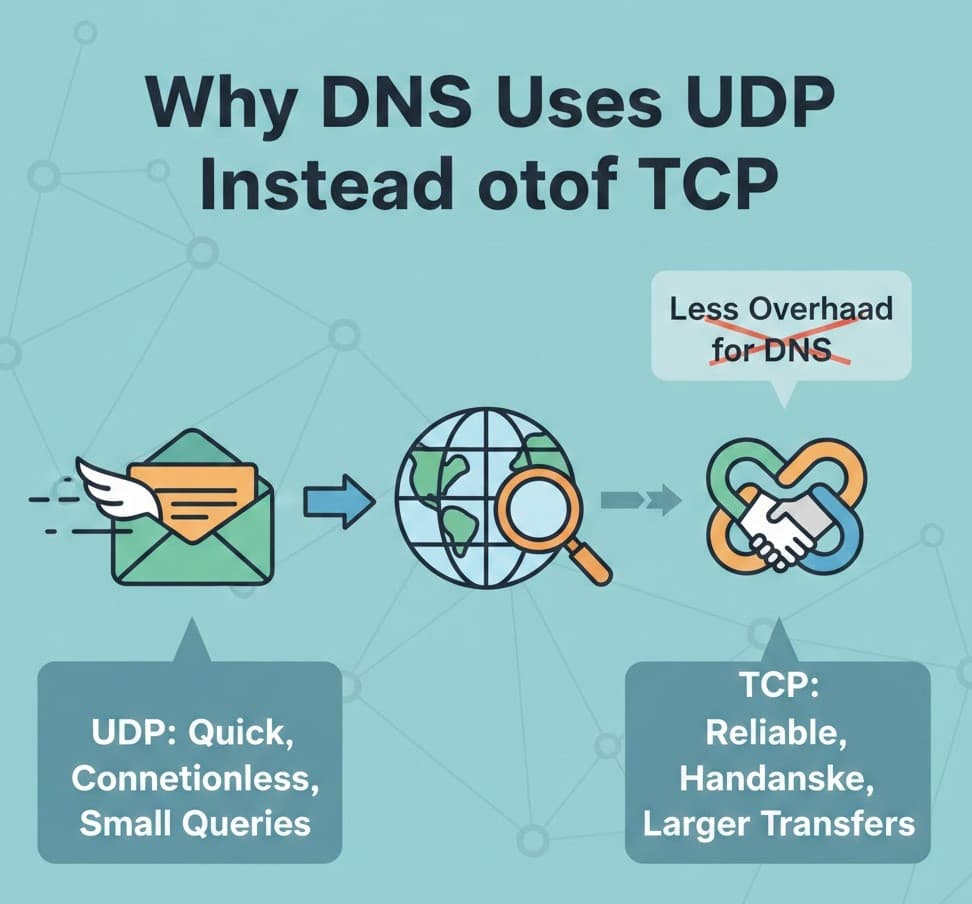
For more information on TCP/IP and networking, check out Why DNS Uses UDP Instead of TCP.
Conclusion
In conclusion, the TCP/IP Protocol Suite for Network Communication is a fundamental protocol suite that enables network communication. It provides a set of rules and protocols that devices can use to communicate with each other, and it is the foundation of the internet. Understanding TCP/IP is essential for any network administrator or developer, and it is a crucial aspect of network security.
Ad Space